The spray bottle in your hand smells like a pine forest after a summer rain. But flip that bottle over and read the fine print-words like hazard, irritant, and use in a well-ventilated area usually hide behind the glossy marketing. For decades, we’ve been sold the idea that a truly clean home has to smell like a chemical plant.
Spoiler alert: It doesn’t.
Eco-friendly cleaning isn’t just a trendy lifestyle movement for people who knit their own sweaters; it’s a genuinely smarter way to live. When you swap out heavy-duty synthetics for sustainable cleaning products and natural alternatives, you stop pumping VOCs (volatile organic compounds) into your living room air, protect your skin, and keep toxic runoff out of our waterways. Best of all? It usually costs a fraction of the price.
Let’s cut through the greenwashing and look at how to build a genuinely green cleaning routine that doesn’t sacrifice performance.
What Is Eco-Friendly Cleaning?
Eco-friendly cleaning is the practice of using sustainable cleaning products, natural ingredients, and zero-waste methods that minimize environmental impact while keeping indoor spaces hygienic and safe. Unlike conventional cleaners loaded with synthetic fragrances, petroleum distillates, and phosphates, green cleaning relies on biodegradable elements—such as white vinegar, baking soda, castile soap, and plant-derived surfactants—to break down grease, kill bacteria, and remove grime without leaving toxic residues.
The Core Ingredients of Natural Cleaning
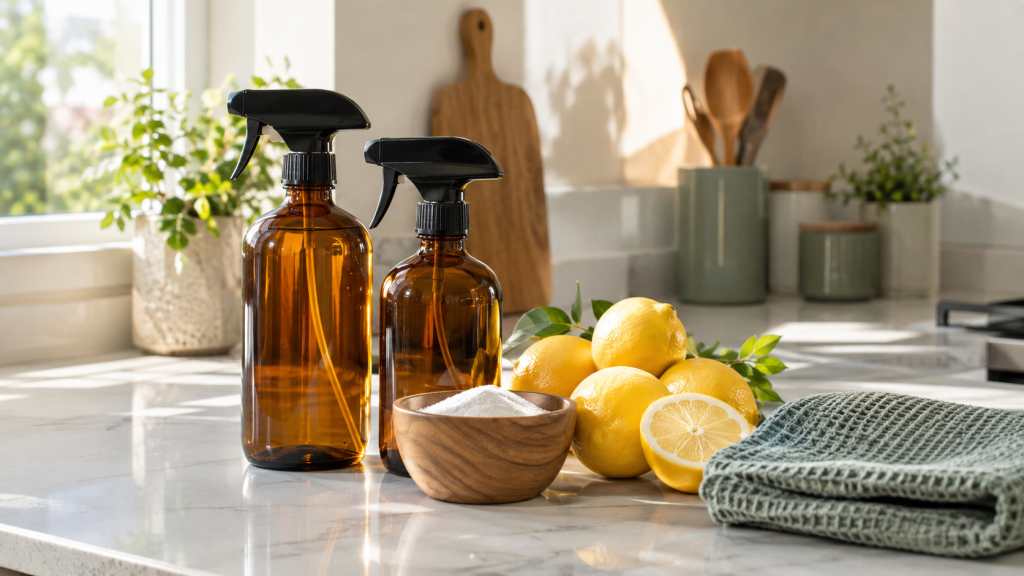
You don’t need a specialized chemical lab under your sink to tackle tough messes. The most effective eco-friendly cleaning supplies are likely already sitting in your pantry.
- Distilled White Vinegar: A natural acid that cuts through grease, dissolves mineral deposits, and neutralizes mild odors.
- Baking Soda (Sodium Bicarbonate): A mild abrasive that lifts stubborn stains and acts as a fantastic natural deodorizer for carpets and soft surfaces.
- Liquid Castile Soap: A versatile, vegetable oil-based soap that acts as a safe surfactant for washing dishes, floors, and general surfaces.
- Hydrogen Peroxide: A biodegradable disinfectant and natural bleaching agent that breaks down safely into water and oxygen.
- Essential Oils: Plant extracts like tea tree, lemon, and eucalyptus that add subtle, natural fragrances and bring extra antimicrobial properties to DIY mixes.
How to Clean Every Room Naturally: Step-by-Step
Transitioning to a green routine works best when you take it room by room. Here is a battle-tested blueprint for getting your entire house spotless using sustainable methods.
1. The Kitchen: Tackling Grease and Food Grime
Kitchens require heavy-duty degreasing, but that doesn’t mean you need caustic oven cleaners.
- To clean glass stovetops: Sprinkle a generous layer of baking soda over the surface, spray with warm water, and let it sit for 15 minutes. Scrape gently with a non-scratch pad, then wipe clean with a damp microfiber cloth.
- To deodorize the microwave: Place a microwave-safe bowl filled with water and a sliced lemon inside. Microwave on high for 3 minutes, let it steam up the interior for 5 minutes, and simply wipe away loosened food splatters.
2. The Bathroom: Conquering Soap Scum and Mildew
Bathrooms are ground zero for stubborn buildup, but natural acids and abrasives make short work of them.
- For daily shower spray: Mix equal parts white vinegar and water with a few drops of dish soap in a reusable glass spray bottle. Mist down glass doors and tiles right after your shower to prevent soap scum buildup.
- For grout whitening: Create a thick paste using baking soda and hydrogen peroxide. Scrub it into grout lines with an old toothbrush, let it sit for 20 minutes, and rinse with warm water.
3. Living Spaces: Dusting and Floor Care
Dusting and sweeping shouldn’t trigger your allergies or leave a sticky chemical film behind.
- Ditch disposable wipes: Use washable microfiber cloths or electrostatic dust-mop pads that trap dust effectively without generating landfill waste.
- Natural hardwood floor wash: Combine warm water, a splash of castile soap, and a few drops of white vinegar in a bucket. Wring your mop out until it’s barely damp, then glide across wood surfaces to restore a natural shine.
Why Conventional Cleaners Miss the Mark
We’ve all been conditioned to believe that if a cleaner doesn’t foam aggressively or smell intensely artificial, it isn’t working. But that chemical foam is often just sodium lauryl sulfate added for sensory satisfaction, not cleaning power.
Traditional cleaners can introduce indoor air pollution that rivals outdoor smog. According to environmental health studies, indoor air can sometimes be up to five times more polluted than outdoor air, largely due to the everyday use of aerosol sprays and fragranced cleaning agents. When you make the switch to non-toxic cleaning, you immediately notice clearer air, less skin irritation, and fewer headaches—literally and figuratively.
Common Myths About Eco-Friendly Cleaning
Myth 1: Natural cleaners don’t actually kill bacteria. Reality: While vinegar isn’t a hospital-grade disinfectant, substances like hydrogen peroxide, boiling water, steam, and specific plant oils possess proven antimicrobial properties that wipe out everyday household germs effectively.
Myth 2: Green cleaning takes way more time and effort. Reality: Once you establish a simple system with a few multi-purpose concentrates, green cleaning is often faster because you aren’t constantly switching between five different specialty bottles.
Myth 3: Eco-friendly products are always too expensive. Reality: Buying a giant jug of white vinegar and a box of baking soda costs pennies compared to branded commercial cleaners. Even when buying certified green brands, concentrated refills significantly lower long-term costs.
Frequently Asked Questions
Can I mix vinegar and castile soap together?
No, it’s best to keep them separate. Vinegar is acidic and castile soap is alkaline; when mixed, they neutralize each other, turning back into oils and salts and ruining the cleaning power of both.
Does eco-friendly cleaning take longer than conventional cleaning?
Not really. While some DIY methods require a few minutes of dwell time to break down grease or scale, modern eco-friendly store-bought cleaners work just as fast as traditional ones without the harsh fumes.
How do I know if a store-bought cleaner is truly green?
Look for reputable third-party certifications like USDA Organic, EPA Safer Choice, Leaping Bunny (cruelty-free), and Green Seal. These certifications verify that the ingredients are genuinely biodegradable and safe.
Is baking soda safe for all surfaces?
Baking soda is a mild abrasive, so it’s safe for most hard surfaces like stainless steel, porcelain, and tile. However, you should avoid using it on delicate natural stones like marble or granite, as it can dull the finish over time.
Can essential oils replace commercial room fresheners?
Yes. Commercial air fresheners often mask odors with synthetic phthalates that disrupt hormones. Pure essential oils diffused in water or mixed with alcohol offer a clean, natural scent without the chemical baggage.
What is the single best eco-swap to make first?
Start by replacing single-use paper towels and disposable disinfecting wipes with washable, high-grade microfiber cloths. It instantly cuts household waste and slashes your grocery bill.
Conclusion
Switching to eco-friendly cleaning isn’t about achieving perfection overnight-it’s about making small, intentional choices that add up. Whether you start by mixing up a batch of all-purpose citrus vinegar or swapping out your dish soap for a plastic-free bar, every change you make creates a healthier home environment. Your lungs, your budget, and the planet will thank you.
Want a spotless, toxin-free home without lifting a finger? Let our professional eco-friendly cleaning team handle the dirty work for you.
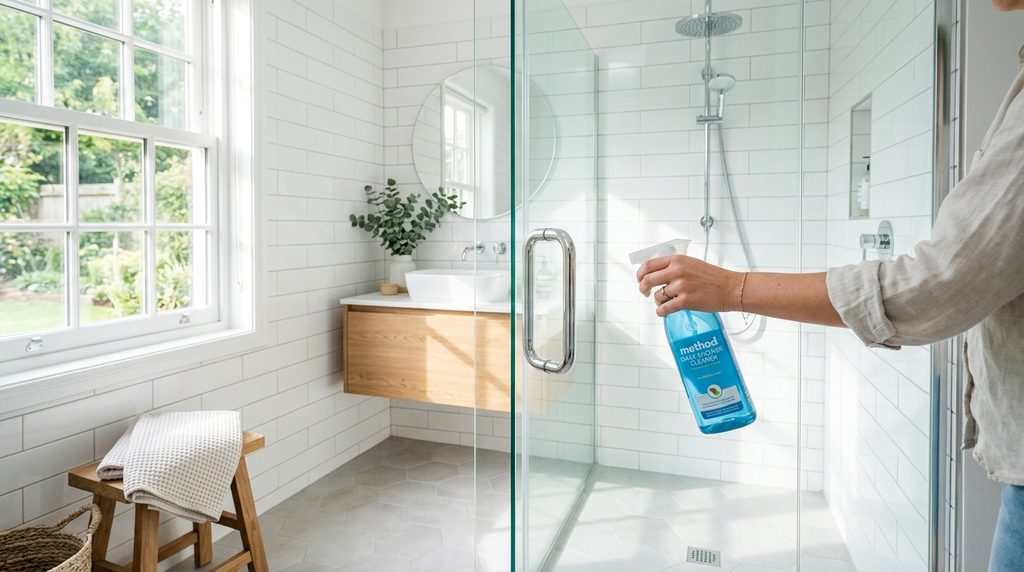
Natural spray bottle cleaning sparkling clean bathroom tiles and glass doors during a green cleaning routine.